The post-call review workspace — a doctor charts the AI draft,
confirms the diagnosis and prescription, and signs, in one calm
surface. Tap any prototype below to try it live (the phone
companion is built for exactly this screen). The frames further down
show each one mid-flow.
Locked language: Geist titles · Newsreader note prose · cool
teal-tinted stone · quiet-safety grammarFonts: self-hosted, real app system
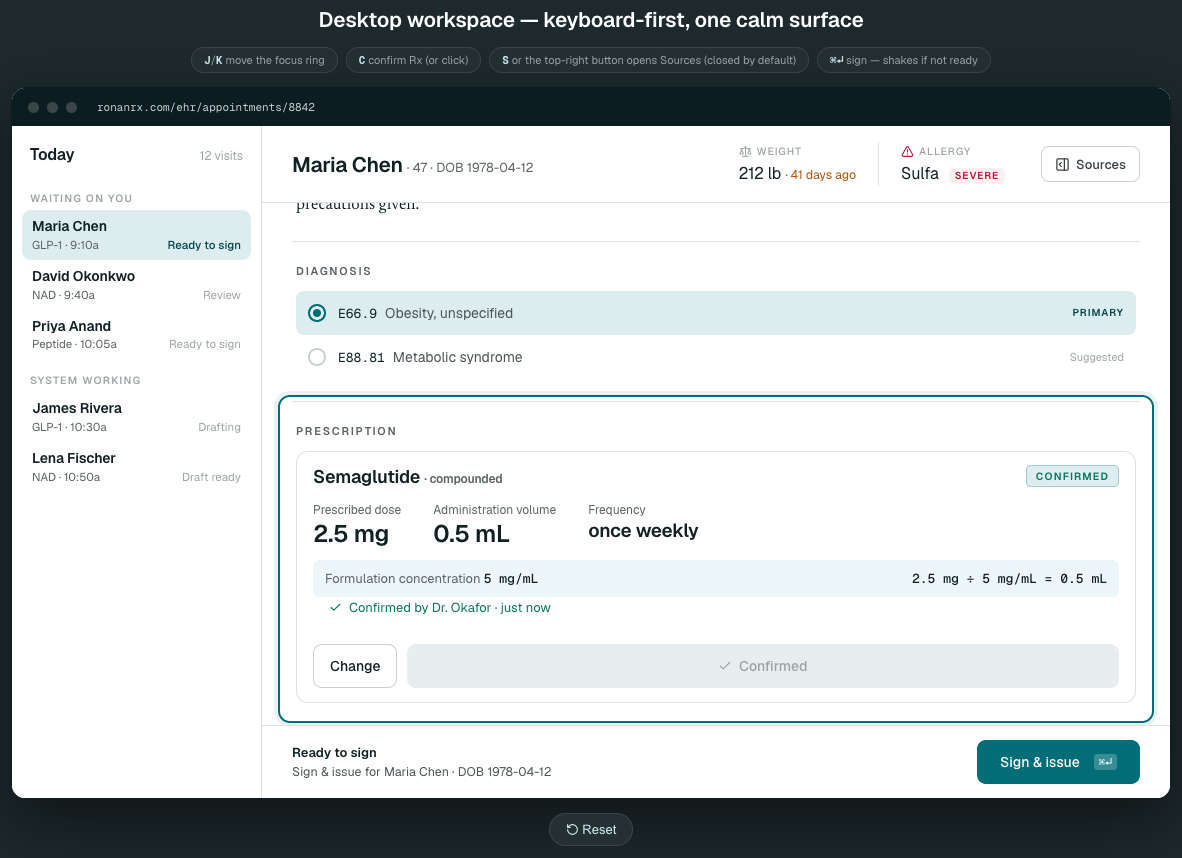
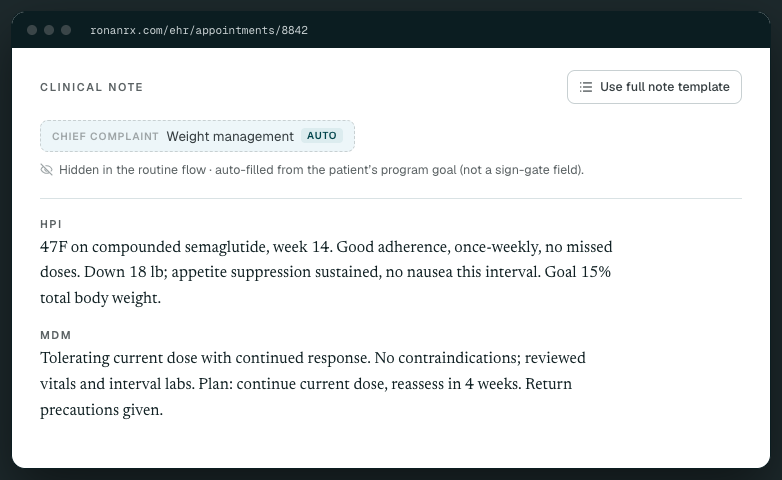
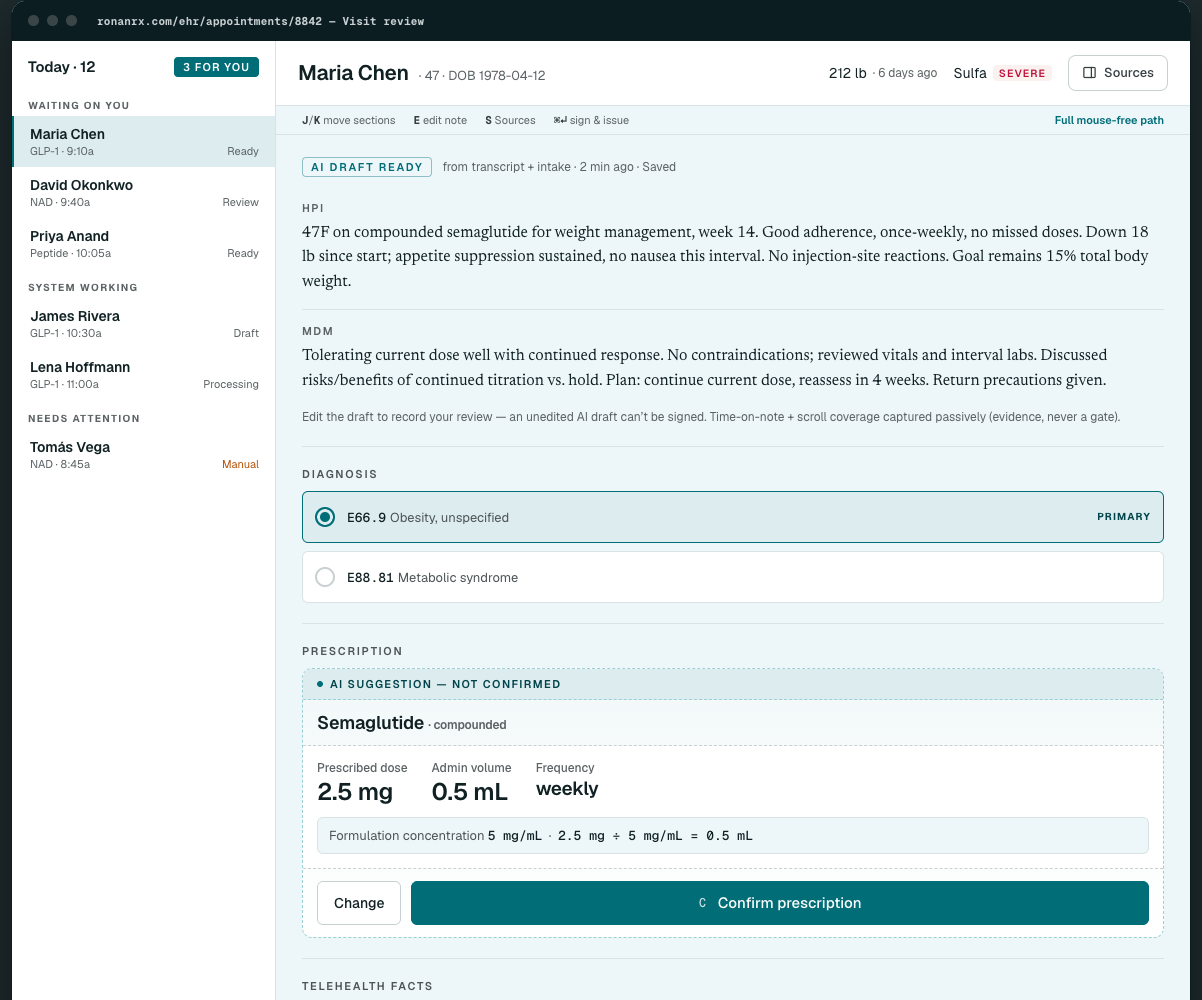
One calm surface: sticky safety header, the HPI + MDM note, curated
ICD-10, and the one card the prescription earns. Confirm the Rx
(C) — or Change it, which re-gates Sign until you re-confirm —
then sign & issue (⌘↵).
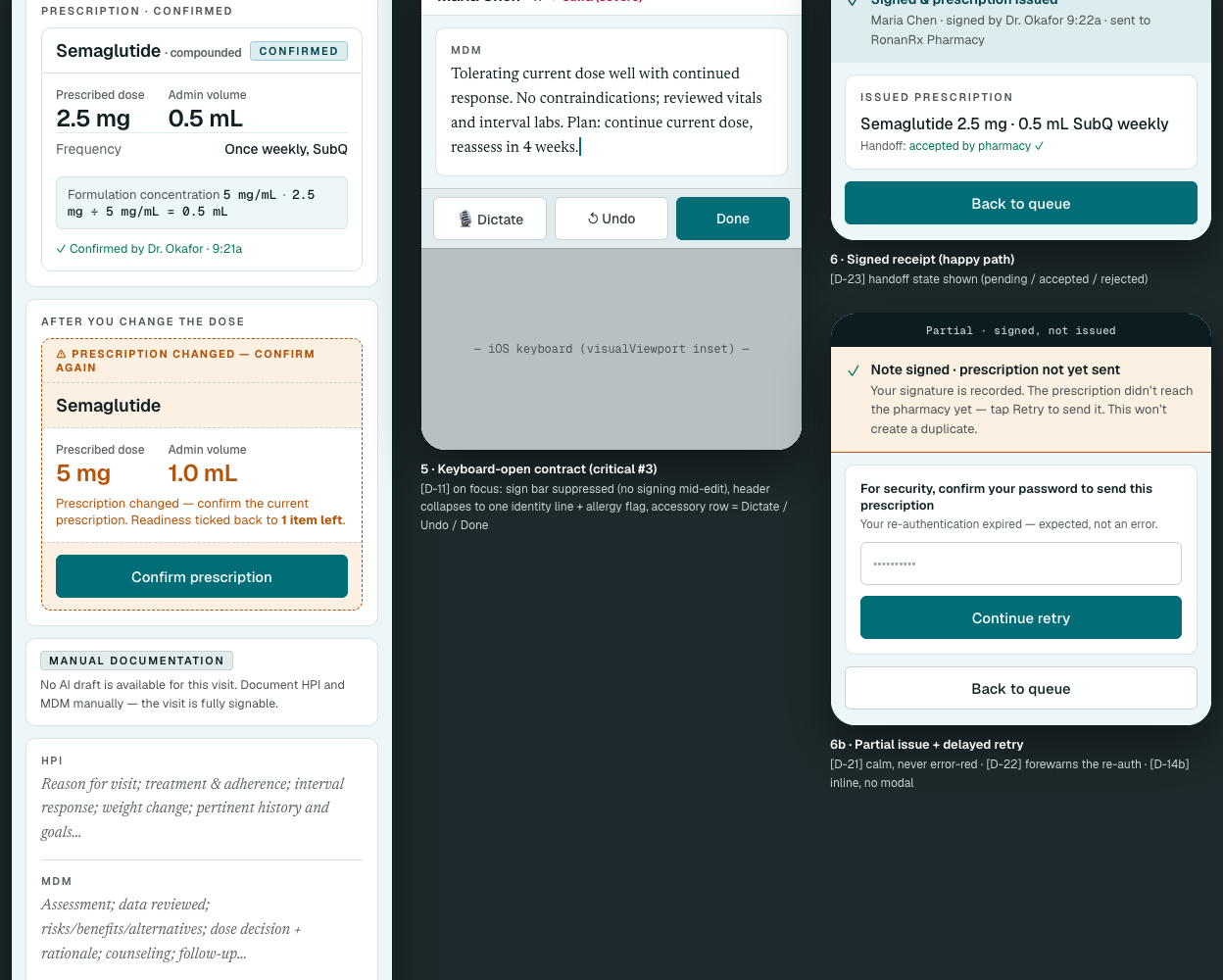
Confirmed & ready. Rx morphs suggested → confirmed on
one calm surface — Sources hidden by default (S opens the
evidence panel) — sign rail armed with the patient identity
anchor.
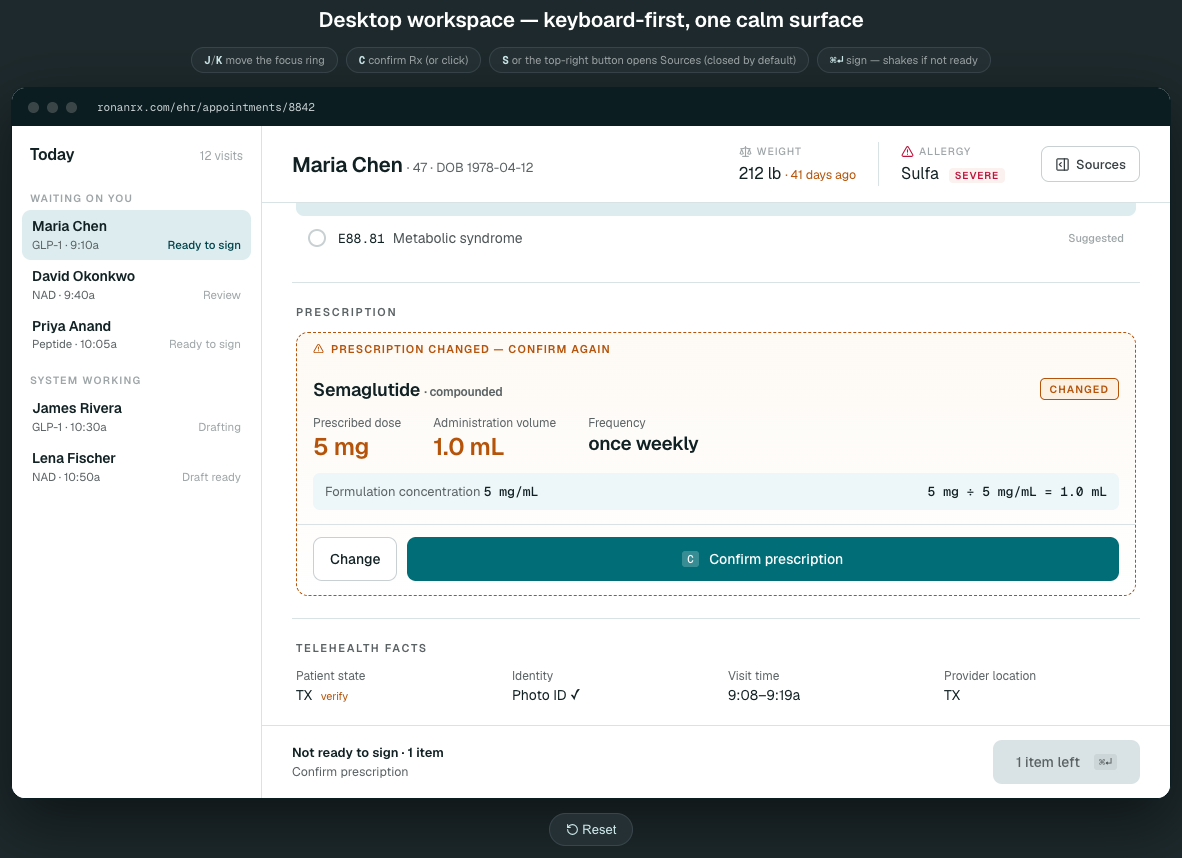
Change → confirm again. Picking a different dose flips the
card to the amber "prescription changed" state, recomputes the
volume, and re-gates Sign — amber is reserved for action-required.
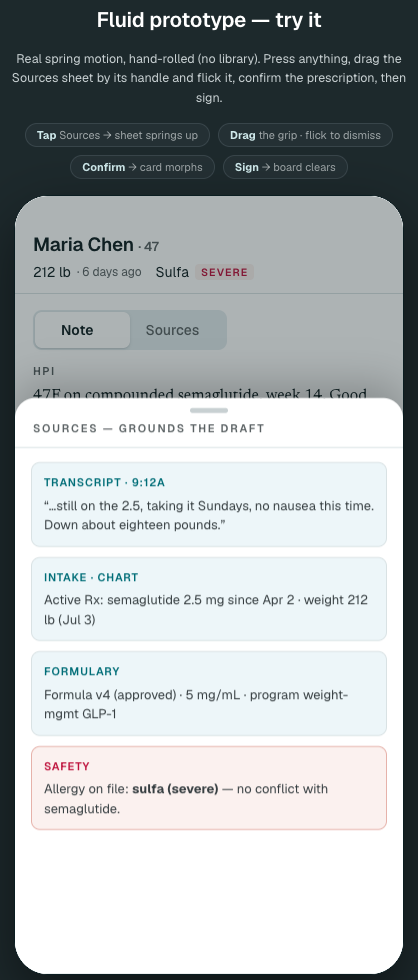
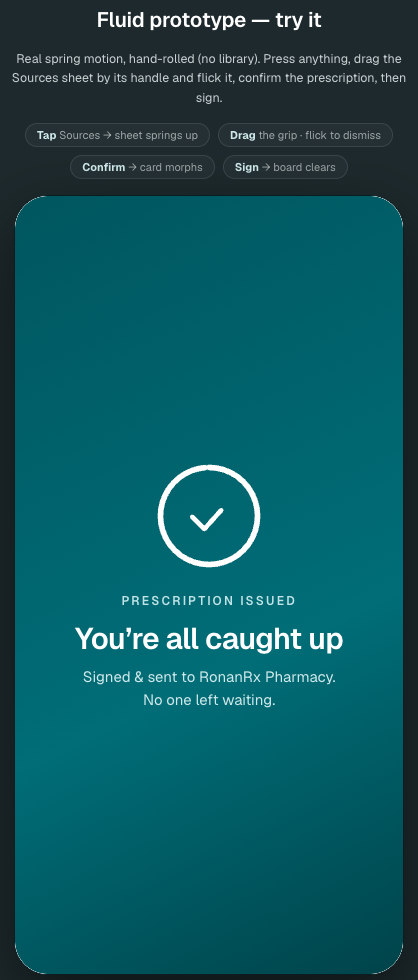
Same system, one hand. Hand-rolled spring motion (no library): press
feedback, a draggable/flickable Sources sheet, the confirm morph, and
the sign → board-clear finish.
The comprehensive 9-surface spec, rebuilt this pass:
Geist titles/names/numbers (Newsreader reserved for note
prose), the provisional Rx moved off amber to accent, amber
reserved for action-required, and field labels dropped to sentence
case.
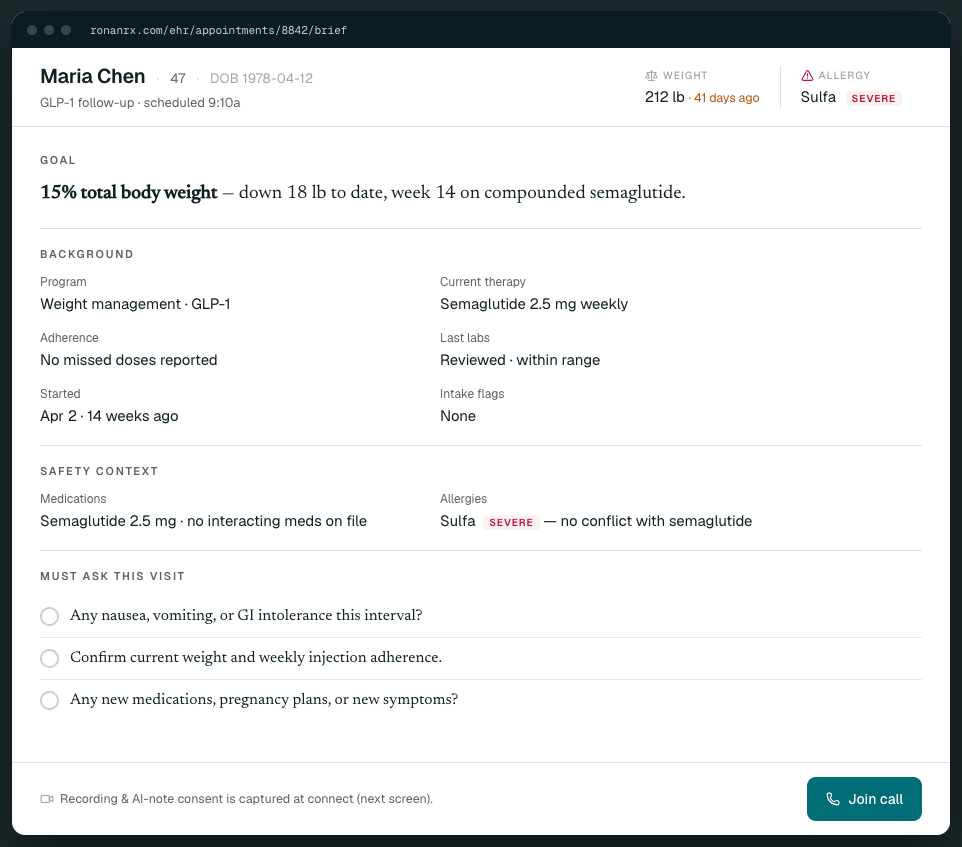
Desktop review workspace. Sans patient name & dose
values; the AI-suggestion band now reads accent-teal, not amber.
The amber split. Confirmed (green) · changed → confirm
again (amber, action-required) · manual documentation (calm, no
alarm).
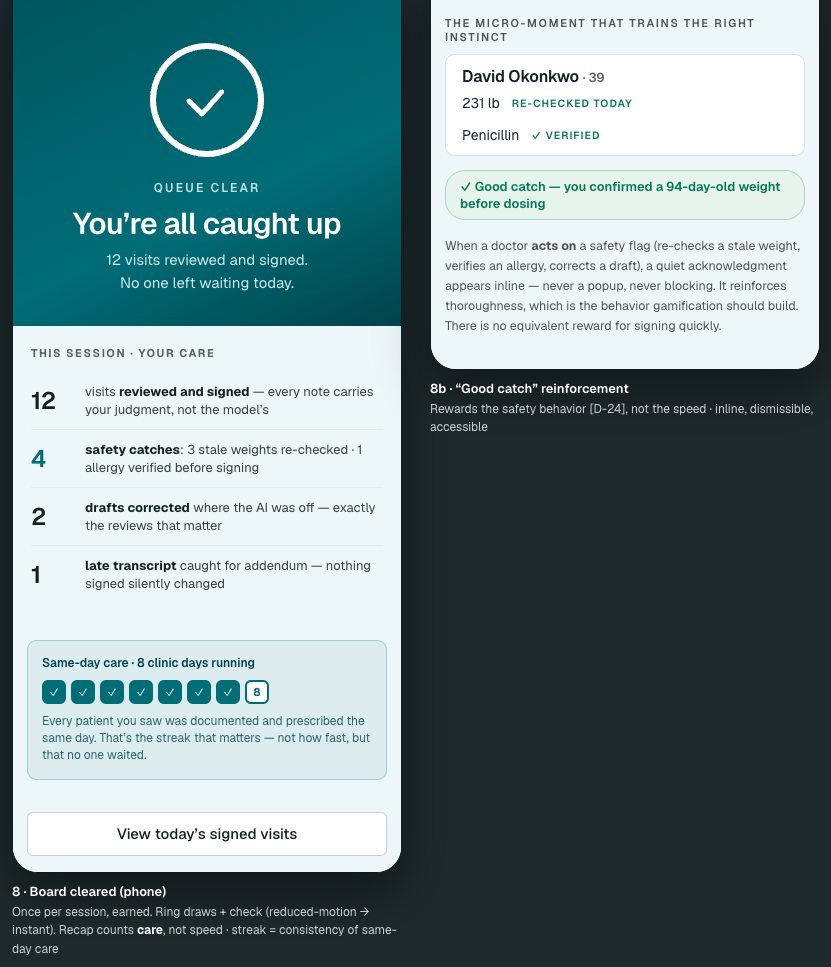
Board cleared. The recap counts care — catches,
corrections, same-day streak — never speed.